Skip to content

Enclosed Boat & RV Storage Buildings

Enclosed boat and RV storage protects boats, RVs, and trailers while giving owners secure, easy access — and demand for it currently outpaces supply in most markets. MakoRabco designs and builds it from site planning through construction, with the wider bays, taller clearances, and drive aisles this asset class actually needs.

Boat and RV storage is a booming business that can be combined with your conventional self storage development or thrive as a stand-alone investment. As community HOA rules increasingly prohibit storage or parking of these leisure vehicles at residences, more owners need somewhere to keep them. Demand for storage currently exceeds supply in most markets — an opportunity MakoRabco can help you build for.

  • Customers tend to be long-term, resulting in low turnover and high occupancy.
  • Management is less intensive — fewer customers, fewer problems.
  • Typically less competition for boat/RV storage than standard mini-storage.
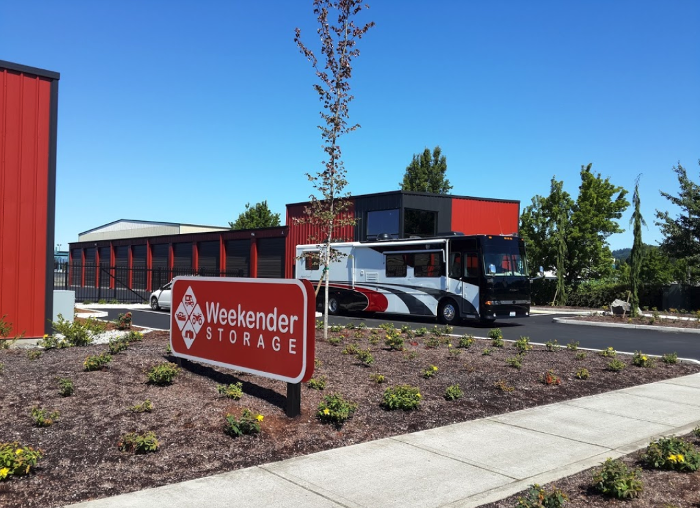
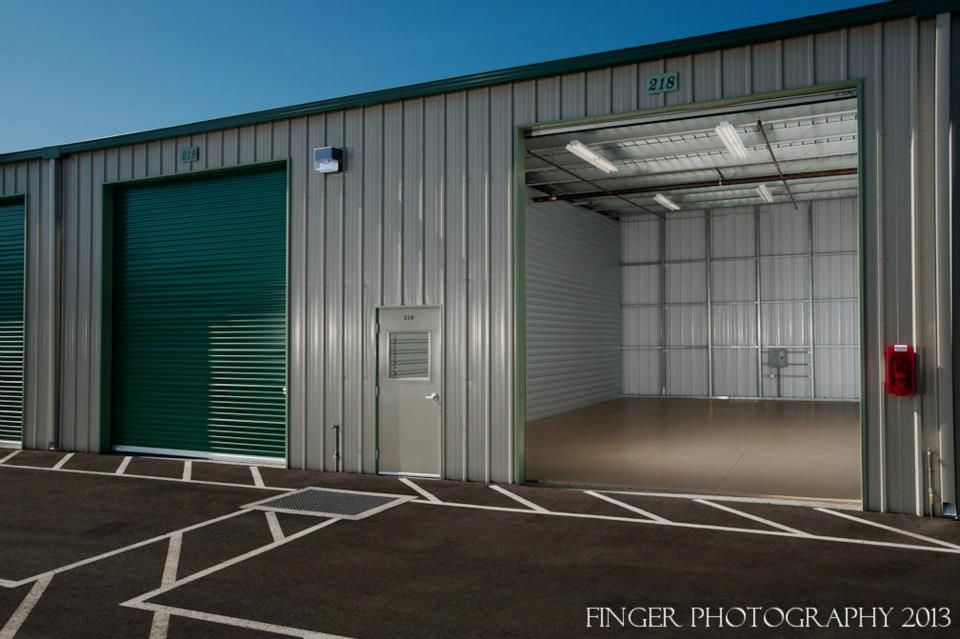
Enclosed boat and RV storage building exterior

Building Specifications

Boat and RV storage is built on the same steel-building system as conventional self storage — we simply increase steel sizing to accommodate the wider bays and larger doors this asset class requires. Units are typically sized to hold not just the vehicle, but the gear that comes with it: tow bars, motorcycle racks, A/C units, jet skis, and other add-ons tenants don't want to store separately.

  • Minimum unit width12 ft
  • Most common unit width14 ft
  • Most common unit depth45–55 ft
  • Typical eave height~16 ft
  • Example unit (14×40)560 sq ft
  • Standard door size14×12 ft clear
  • Drive aisle (perpendicular)~55 ft recommended
  • Drive aisle (60° angled)~40 ft recommended

Drive aisle width is one of the most important site-planning factors for boat and RV storage — undersized aisles make maneuvering difficult, especially for back-in configurations, which remain the most common layout in practice even though pull-through access is easier and preferred where the site allows it. Recommended widths are approximately 55 ft for perpendicular spaces and 40 ft for spaces angled at 60°, though actual requirements shift with your vehicle mix and specific layout. This is one of the details we help work through with a free site plan and estimate.

When sizing units, weigh the cost to build against potential income on a per-square-foot basis — a 14×40 unit uses roughly 560 sq ft of land that could otherwise hold several conventional storage units, so it's worth gauging local demand before committing to a unit mix.

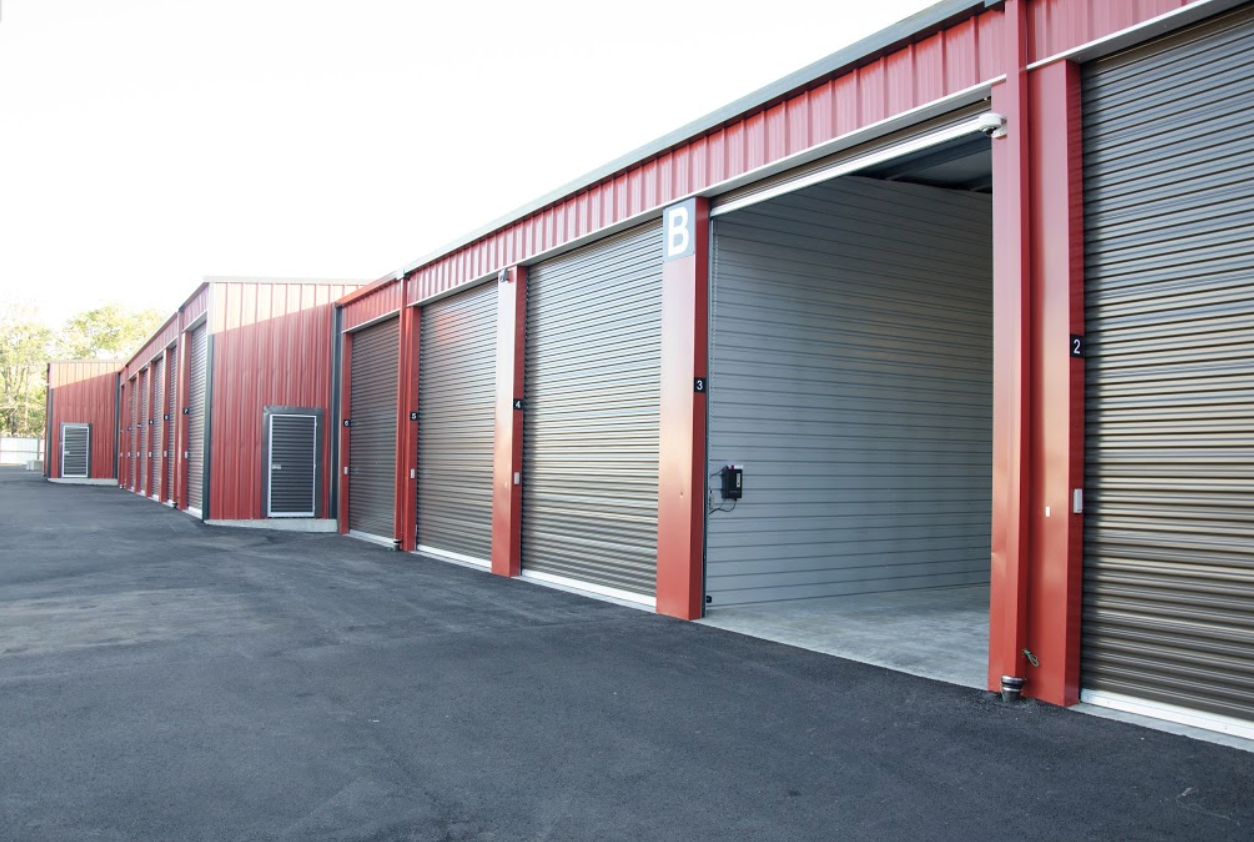
Interior of RV storage bay showing width and clearance

Door Sizing by Eave Height

The 14×12 ft clear roll-up door above is standard at a 16 ft eave height. Smaller units — 30 ft or less in depth — only need a 14 ft eave height, which allows a 12×10 ft clear roll-up door instead.

Structural & Wind Considerations

For comparison, standard mini-storage is framed with 4-inch, 16-gauge Cee studs, Girts, and Zee purlins on a conventional grid. Boat and RV buildings need more strength across wider, taller spans, so we scale up from that baseline — heavier-gauge members (6–8 inch, 14-gauge) or a clear-span, rigid-frame design, sized to the specific building.

Wind resistance matters more as height and width increase. More enclosed walls reduce roof uplift; open canopy roofs catch wind and require engineered anchoring. Roll-up doors larger than 14×14 ft are prone to wind deflection off their tracks, and any door over 100 sq ft should include a chain hoist or motorized opener.

Wind-load, framing, and door requirements are worked out during engineering and design for your specific building — get in touch for a free site plan and estimate to get started.

Security infrastructure — fencing, gate access, cameras — is typically planned alongside your site design and handled by your security vendor of choice.

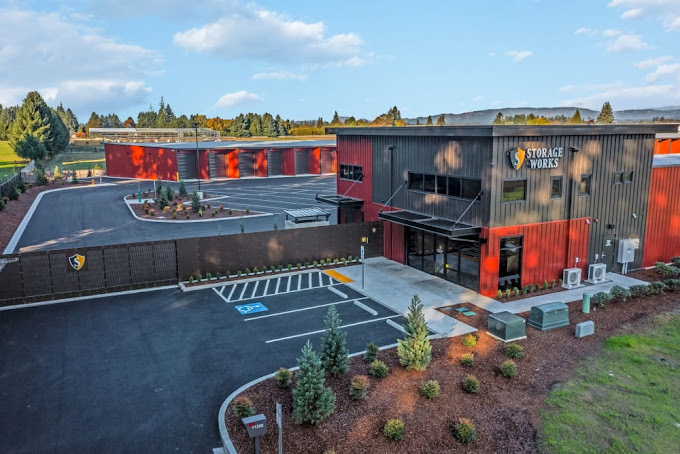
Sentinel Self Storage enclosed boat and RV storage building, Sherwood, OR

Frequently Asked Questions

What size buildings work best for boat and RV storage?

Unit widths typically start at a 12 ft minimum, with 14 ft being the most common width. Most common depths run 45–55 ft, and eave heights around 16 ft are standard to accommodate taller RVs and boats on trailers.

How is boat and RV storage construction different from standard self storage?

It uses the same steel-building system, scaled up: heavier-gauge steel (6–8 inch, 14-gauge vs. standard 4-inch, 16-gauge), wider bays, taller clearances, and reinforced wind-load engineering for the larger doors and spans this asset class requires.

What's the difference between enclosed storage and canopy storage?

Enclosed buildings offer full weather protection and typically command higher rents, at a higher construction cost than canopies but less than climate-controlled storage. Canopies cost less to build but offer roof-only coverage and may carry different tax and fire-code treatment.

Does MakoRabco build both enclosed buildings and open canopies?

Yes — MakoRabco builds both fully enclosed boat & RV structures and steel storage canopies, depending on your site, budget, and local climate and code requirements.

How wide should drive aisles be for boat and RV storage?

We recommend approximately 55 ft of drive aisle width for perpendicular spaces, and approximately 40 ft for spaces angled at 60 degrees. Back-in configurations are still the most common layout, though pull-through access is preferred and easier to maneuver where the site allows it — actual requirements can shift depending on your vehicle mix and site layout.

How much land does a boat and RV storage facility need?

Considerably more than standard self storage. A typical mini-storage site averages 3–5 acres, while boat and RV storage sites typically run 10–20 acres, with coverage ratios averaging 35–45% per acre once drive aisles and setbacks are accounted for.

Why does grading matter for boat and RV storage buildings?

If a slab isn't graded properly and the door isn't flush with the ground, the unit isn't fully secure, the vehicle is more exposed to the elements, and wind can get underneath the door — which can damage it if strong enough.

Can boat and RV storage be added to an existing self storage facility?

Yes. It's commonly built as an addition to a conventional self storage site, using the same steel-building system with wider bays and taller clearances — or it can be developed as a stand-alone investment.

Does MakoRabco offer a free site plan and estimate?

Yes — MakoRabco provides free site plans and estimates to help you scope a project. Engineering and design services are a separate, paid part of the process once you move forward.

What size doors do boat and RV storage buildings use?

Most units use a 14×12 ft clear roll-up door at a 16 ft eave height. Smaller units — 30 ft or less in depth — only need a 14 ft eave height, which allows for a 12×10 ft clear door instead.

Get a Quote for Your Site

Tell us about your project and a MakoRabco team member will follow up with next steps.